






La memoria strutturata mantiene il richiamo multi-hop perfetto a un milione di entita
Il nostro livello di memoria mantiene precision-at-5 = 1,00 nel recupero multi-hop man mano che l'archivio cresce fino a un milione di entita, senza degradazione da cinquantamila a un milione.

Ask most AI systems a question that requires connecting two facts — who manages the team that ships the product a given customer depends on — and they answer by re-reading prose and hoping the right passages surface in the same context window. It works until the corpus grows, the hops get longer, or the answer lives in two documents that never appear together. Then it quietly degrades, and you cannot tell when.
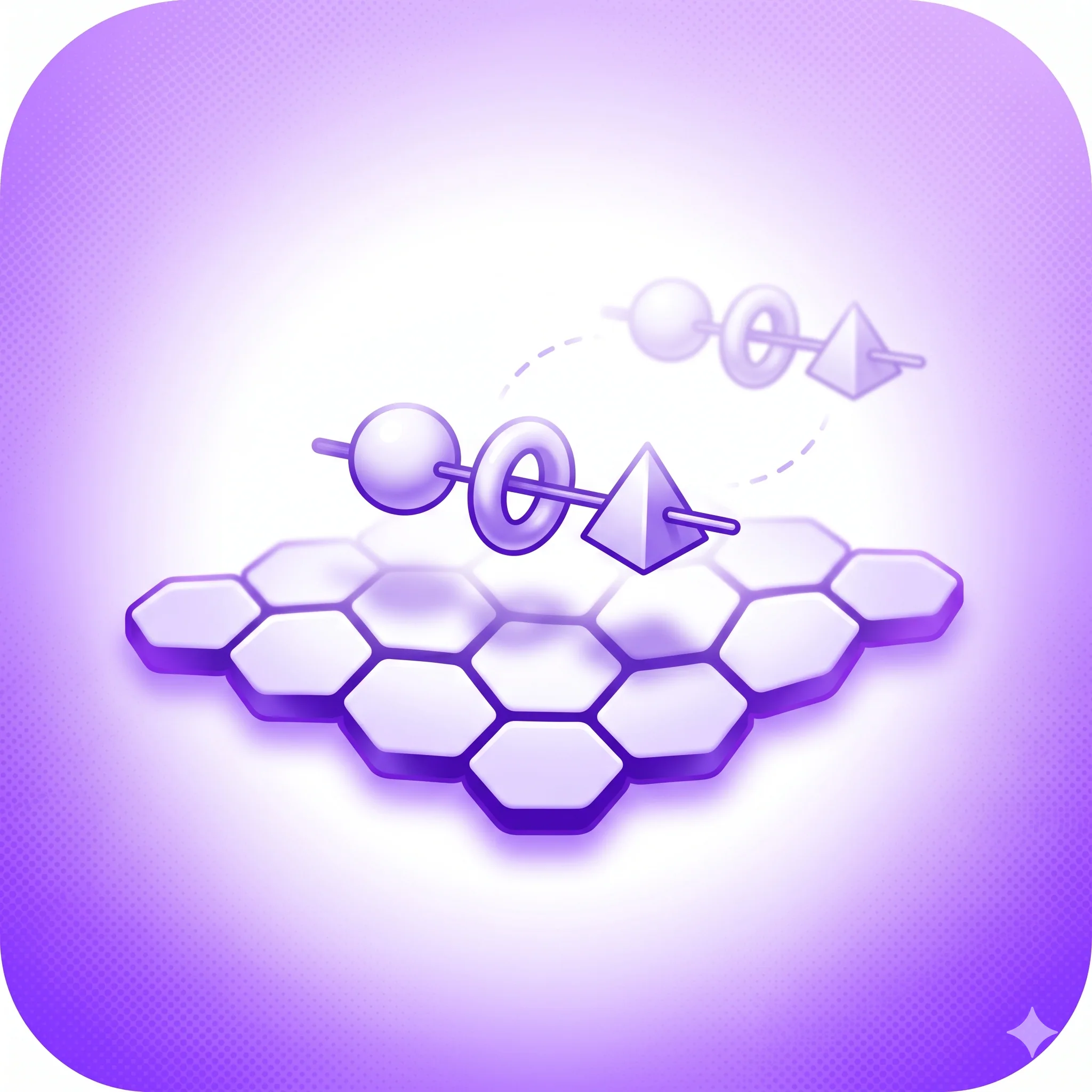
We took a different route. Instead of re-deriving answers from text every time, we bind facts into a structured memory where a hop is a first-class operation. The question is answered by walking bindings, not by scrolling a buffer.
What we measured
We grew the store across three scales — fifty thousand, two hundred thousand and one million entities — using 1,024-dimensional codes, and ran two hundred multi-hop queries at each scale. Compound retrieval precision-at-5 stayed at a clean 1.00 throughout. The structure that binds an entity to its relations survived a twenty-fold growth in the size of the memory with no erosion in recall.
For context, a strong vector index on the same kind of task tends to sit around 0.99 and depends heavily on how it is tuned. The gap sounds small until you remember what a missed hop costs in a clinical, legal or financial setting: the wrong answer delivered confidently.
Why structure beats search
A vector search returns things that look similar. A multi-hop question is not a similarity query — it is a path. Binding the path into memory means the second hop starts from the bound result of the first, rather than from a fresh guess about which passage to read next. That is why precision holds as the store scales: the work the index would have to redo on every query is done once, at write time, and kept.
Recall that holds at a million entities is not a search trick. It is what you get when the memory has structure instead of just vectors.
Structured-memory research note
Held to a falsifiable bar
Numbers like “perfect recall” deserve suspicion, so we made the result falsifiable. Eight independent scientific gates close on this work — covering retrieval, binding, role-swap, and leakage-safety — each with a pass/fail threshold set in advance. The million-entity figure is measured end-to-end through the same write-and-query interface a downstream system would use, not on a favourable toy slice.
Where it goes
This memory layer is the substrate other systems read and write through: long-lived agents that must remember decisions across days, compliance tools that need an auditable chain from claim to source, and models that compose answers from bound evidence rather than from prose. It is research that is already wearing a production interface.