



曲率原生硅芯片:芯片物理即模型数学
我们的底层架构项目致力于经典室温硅芯片,将计算实现为弯曲测地线流——硬件弛豫即模型推理,协同设计。
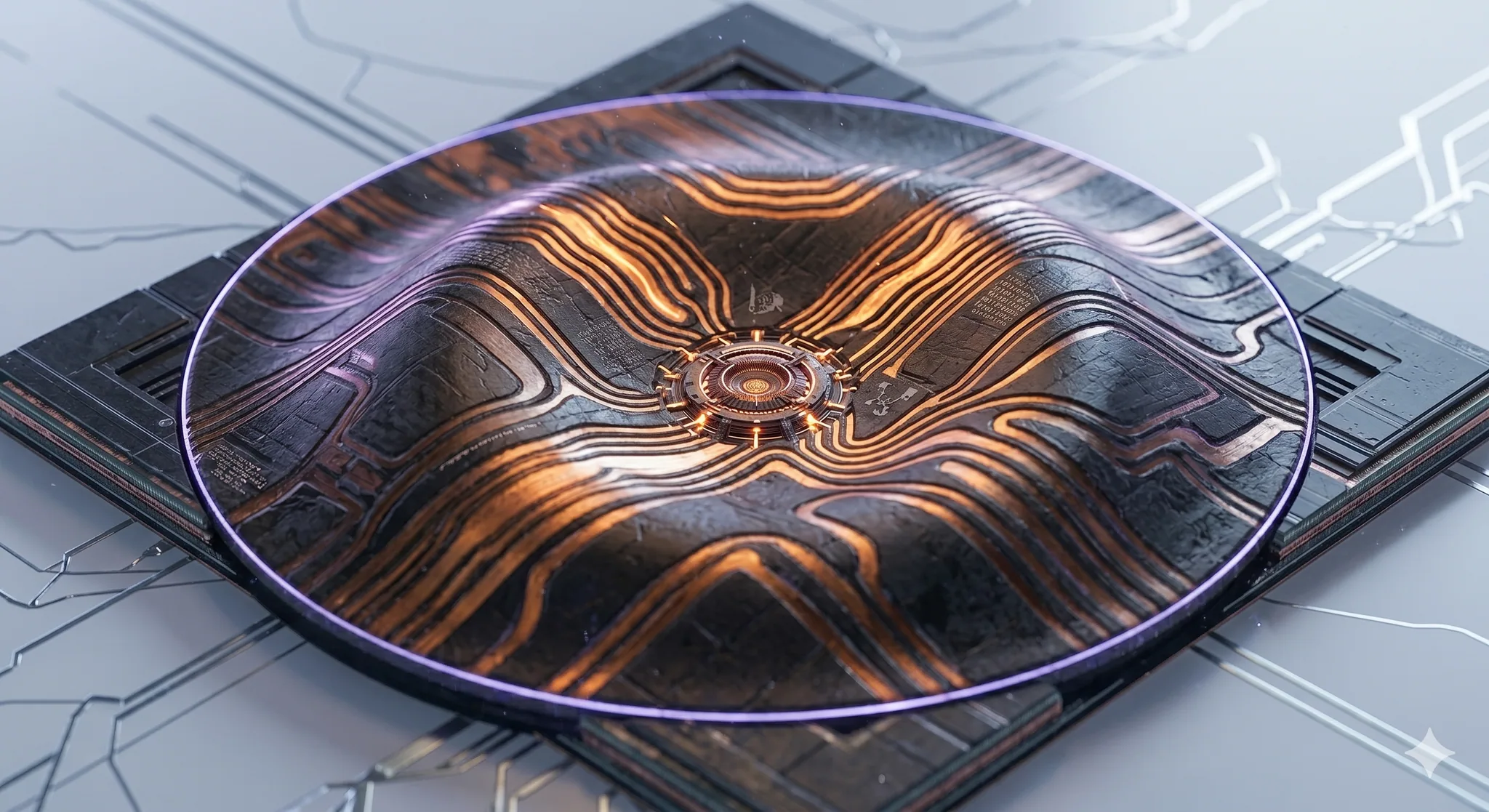
For fifty years we have made chips faster by making them flatter and more uniform: a regular grid, a global clock, the same operation everywhere. It is an extraordinary engineering achievement, and it is also a choice — one that forces the physics of computation to fight the physics of the material it runs on.
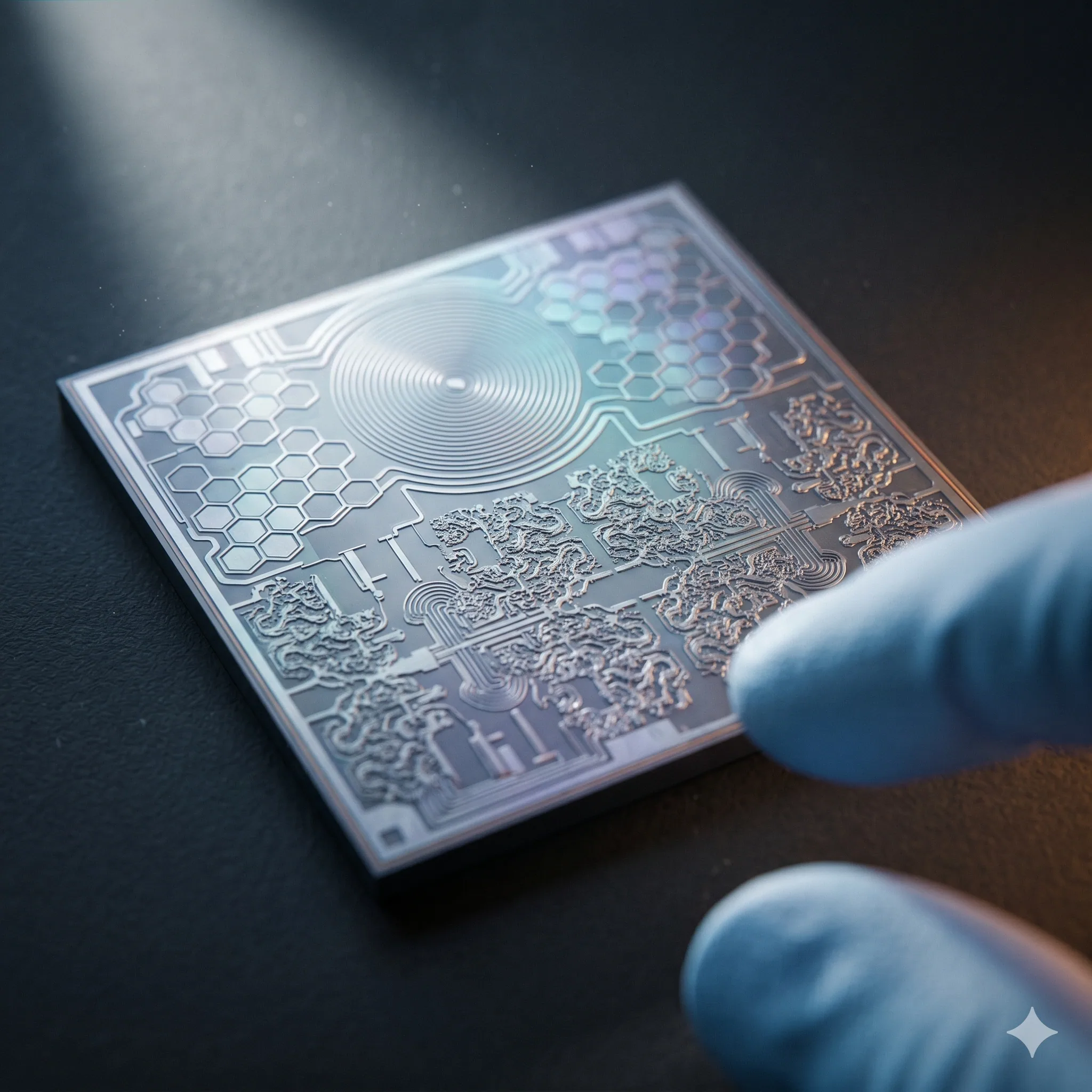
Our substrate program takes the opposite bet. It commits to classical, room-temperature silicon, but arranges it so that computation is realised as flow along a curved surface rather than sampling on a flat grid. The geometry is the computation.
The bet
There is a deep result hiding in thermodynamics: the lowest-dissipation way to move a physical system between two states already traces the same kind of curved, optimal path that a well-posed inference problem wants to follow. Physics, in other words, already prefers geodesics — standard chips simply do not realise them.
We design the substrate so the relaxation dynamics of the hardware reproduce the model’s continuous-time flow exactly. In simulation that correspondence holds to one part in ten billion. When it holds, computation and physics stop being two things connected by a compiler and become a single operator.
Why it points at the edge
Co-design like this is not aimed at the data centre. It is aimed at the tiny, energy-constrained devices where a large attention model never fits in the first place — routers, set-top boxes, sensors, wearables. It is the hardware companion to a model family that already wins when parameters and power are scarce and timing carries the signal.
The cleanest computer is the one whose physics is already doing the math you wanted. We are trying to build that, in ordinary silicon.
Substrate program note
Honest scope
This is a substrate thesis backed by simulation and physical design, not a finished product with a tape-out date we are quoting. The correspondence between model and substrate is verified in a digital twin; closing the remaining distance to silicon in the field is real engineering still ahead of us. We would rather state that plainly than imply a chip that does not yet exist.